07/04/2026
Hai Phong sets planning orientation to 2050, vision to 2075
Implementing planning tasks ratified by the Prime Minister under Decision No. 423 dated March 11, 2026, Hai Phong has drawn up its master plan to 2050, with a vision to 2075, covering an area of about 3,200 km2 and a current population of around 4.6 million. At a working session with the city’s Party Executive Committee on March 16, General Secretary To Lam stressed that Hai Phong must pay attention to development planning. Planning is not only about spatial arrangement or land allocation, but foremost about a strategic vision of the city’s position in the country and the world.
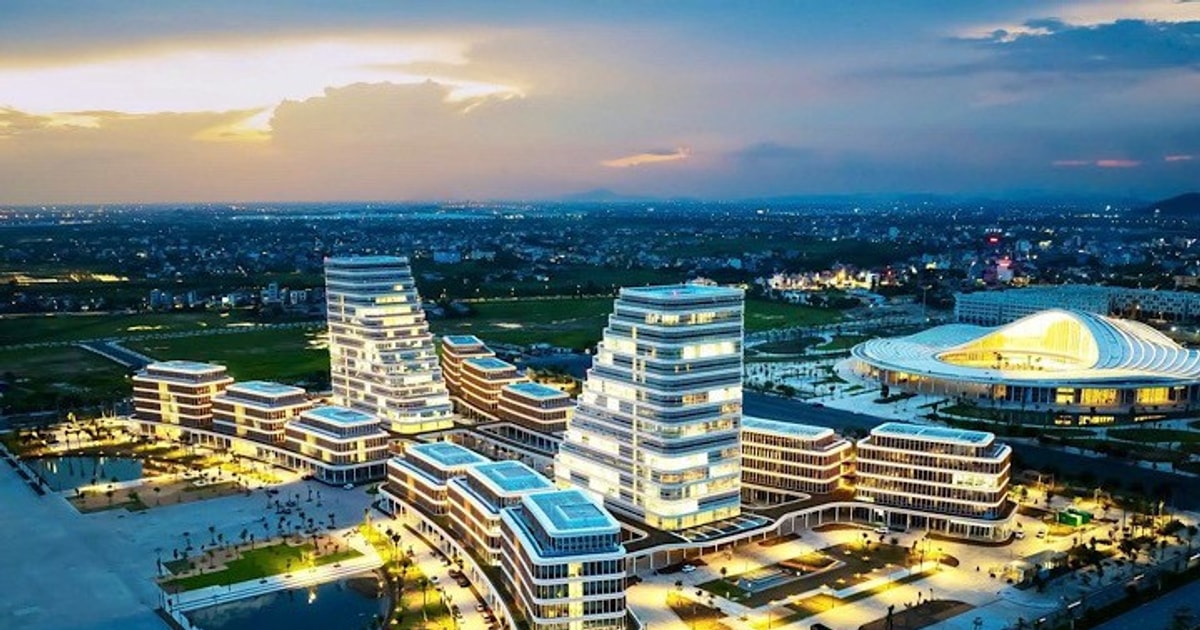
Under the planning orientation to 2050, Hai Phong aims to become a modern, smart, ecological and livable industrial port city of global standing; a key national and international center for the marine economy, seaports and logistics; a high-quality tourism hub; and an international center for education, research, application and development of science and technology, particularly marine science and technology. The city also aims to be one of the country’s leading growth poles, with improved material and spiritual living standards approaching those of leading cities in Asia and the world, while building models of socialism associated with socialist-oriented people.
Looking ahead to 2075 and beyond, Hai Phong targets becoming a leading global marine economic mega-city, mastering core technologies and affirming its position as an international hub for education, scientific research and services, with high living standards. To achieve development goals to 2030, with a vision to 2045 and beyond, General Secretary To Lam confirmed that planning is not merely about spatial arrangement or land allocation, but first of all a strategic vision. If action programs are the driving force, planning serves as the roadmap guiding long-term development.
General Secretary To Lam
Based on new development space and the need to strengthen connectivity with major urban centers in Hanoi and the Red River Delta, Hai Phong has defined its urban spatial structure as comprising two centers, three growth corridors, three transit-oriented development (TOD) areas, four economic zones and five landscape corridors.
The two centers include eastern Hai Phong urban area and western Hai Phong urban area. The three growth corridors are the east–west axis, north–south axis and coastal axis. The three TOD areas include Nam Hai Duong, Nam Hai Phong and Ninh Xa. The four economic zones are Dinh Vu–Cat Hai, southern Hai Phong, a specialized economic zone, and northern Hai Phong. The five landscape corridors include Kinh Thay–Bach Dang river, Kinh Mon–Cam river, Thai Binh–Lach Tray river, Thai Binh–Van Uc river and Bac Hung Hai.
The initial focus need to be placed on 2030 and 2045. The General Secretary provided specific directions for each phase. He said that amid intensifying regional competition, Hai Phong must position itself against major port cities in Asia and the world to shape its vision as a modern port city, logistics hub and marine economic center with international competitiveness.
He added that development planning must be built with a long-term vision, not only to 2030 or 2045 but further to 2100, aiming to develop a globally competitive coastal mega-city and a trade, logistics and marine economic hub of East Asia. This requires the city to prepare a long-term vision for expanding development space, protecting coastal ecosystems, developing infrastructure adaptable to climate change, and building a sustainable coastal urban model in the new technological era.
