18/11/2026
Identifying bottlenecks in Do Son's tourism development
Blessed with a beautiful coastline and scenic landscapes, along with a system of historical sites, festivals and distinctive cultural values, Do Son has long been one of Hai Phong’s familiar tourist destinations. However, to make effective use of these advantages and develop tourism in line with its potential, the locality needs to identify existing bottlenecks and address them promptly.
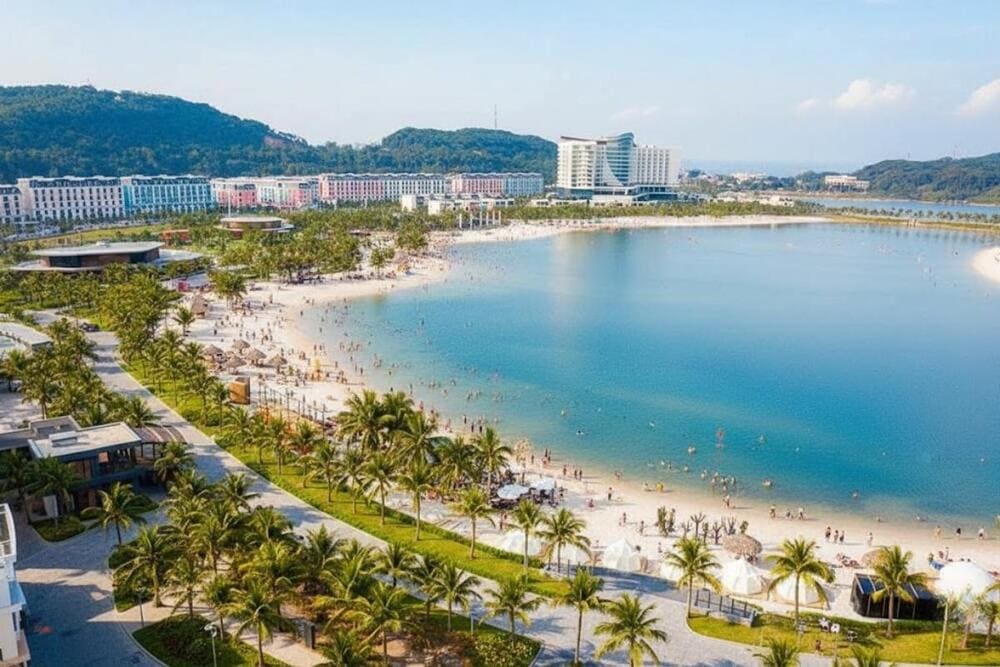
In recent years, alongside investment in the restoration and renovation of historical sites such as Tuong Long Tower and K15 Wharf, efforts to preserve and promote Do Son’s heritage values have made positive progress. A number of tourism products combining beach tourism with spiritual, historical, festival and experiential tourism have gradually taken shape. In the first 10 months of 2026 alone, Do Son is estimated to have welcomed more than 4.7 million visitors, equivalent to 96.5% of its annual target. These figures demonstrate the destination's appeal, while also highlighting the need to further improve the conditions for more stable, diversified and sustainable tourism development.
One of the difficulties identified by local authorities is the shortage of personnel working in the fields of culture, heritage and tourism. The locality also lacks professionally trained tour guides. In addition to human resources, funding for heritage preservation and the restoration of historical sites remains a challenge that requires attention. Notably, Do Son retains a rich body of traditional knowledge. However, these values have yet to be systematically inventoried and documented. The number of elderly artisans and knowledge holders is declining, while the spaces for practicing traditional activities are becoming increasingly limited.
These challenges do not detract from Do Son’s inherent strengths, but underscore the gap between its tourism potential and the extent to which that potential is being realized. Properly identifying bottlenecks in human resources, funding, infrastructure and heritage promotion will be an essential step in selecting appropriate solutions. Sustainable tourism development requires not only attractive destinations but also a more coordinated and effective foundation for management, preservation and tourism operations.
