Vietnamese ancient costumes add color to the experience at Con Son Festival - Kiep Bac
Not only visiting relics, offering incense or enjoying art programs, people and tourists come to Con Son Festival, Kiep Silver - Autumn 2026 also has another interesting way to experience heritage: wearing Vietnamese ancient costumes, learning about the history of costumes and immersing yourself in the traditional cultural space in the middle of the land product.
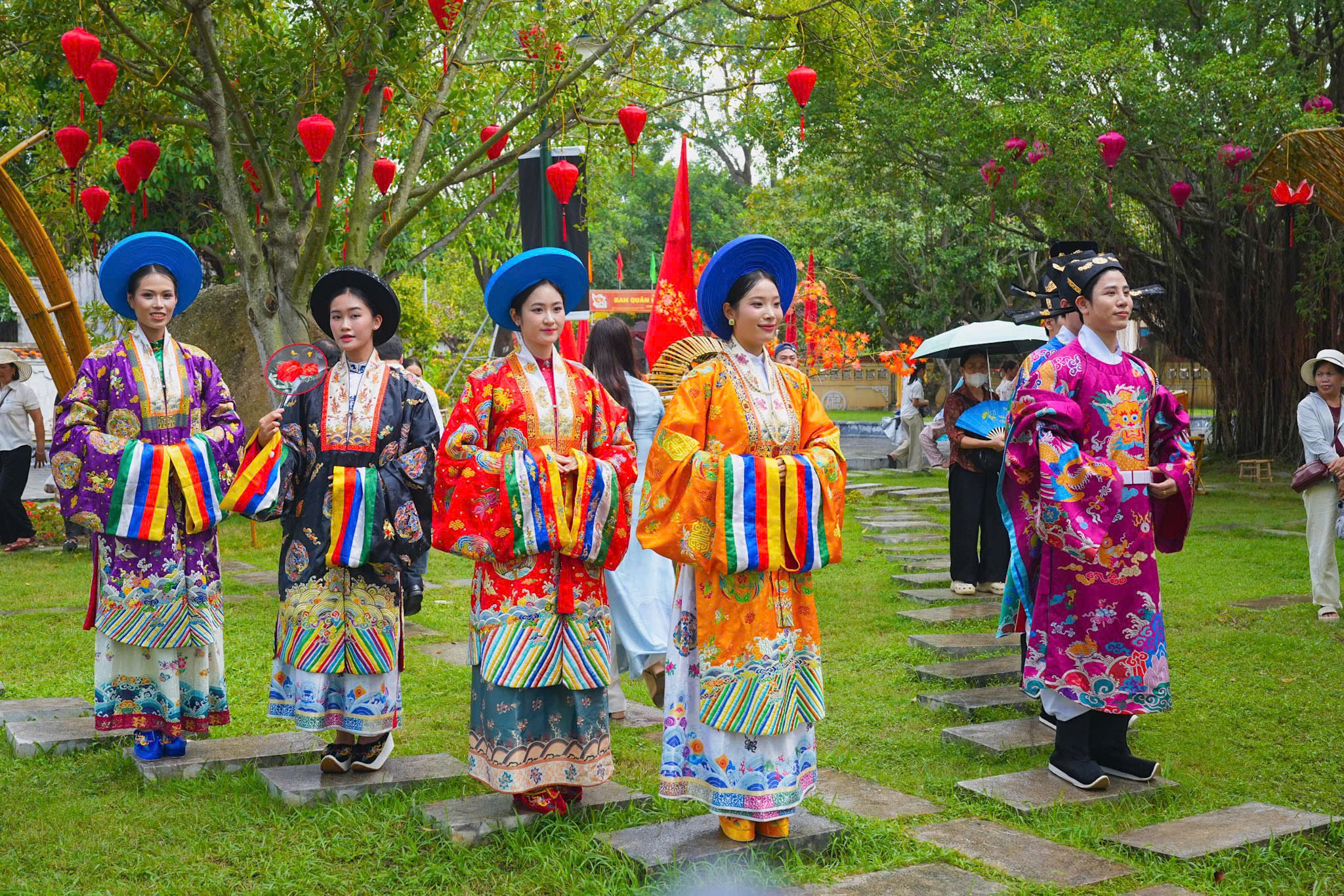 Vietnamese costumes are introduced in the space of Con Son Festival, Kiep Bac - Autumn 2026, contributing to recreating the beauty of traditional costumes and bringing national cultural values closer to visitors.
In the ancient space of Con Son - Kiep Bac, the five-body shirts, shirts, Nhat Binh shirts and many traditional costumes are restored to become part of cultural experience and performance activities. The ancient clothes that appear in the middle of the space of temples, pagodas, and relic landscapes not only create beautiful images but also open up a closer and more intuitive approach to heritage for people, especially young people.
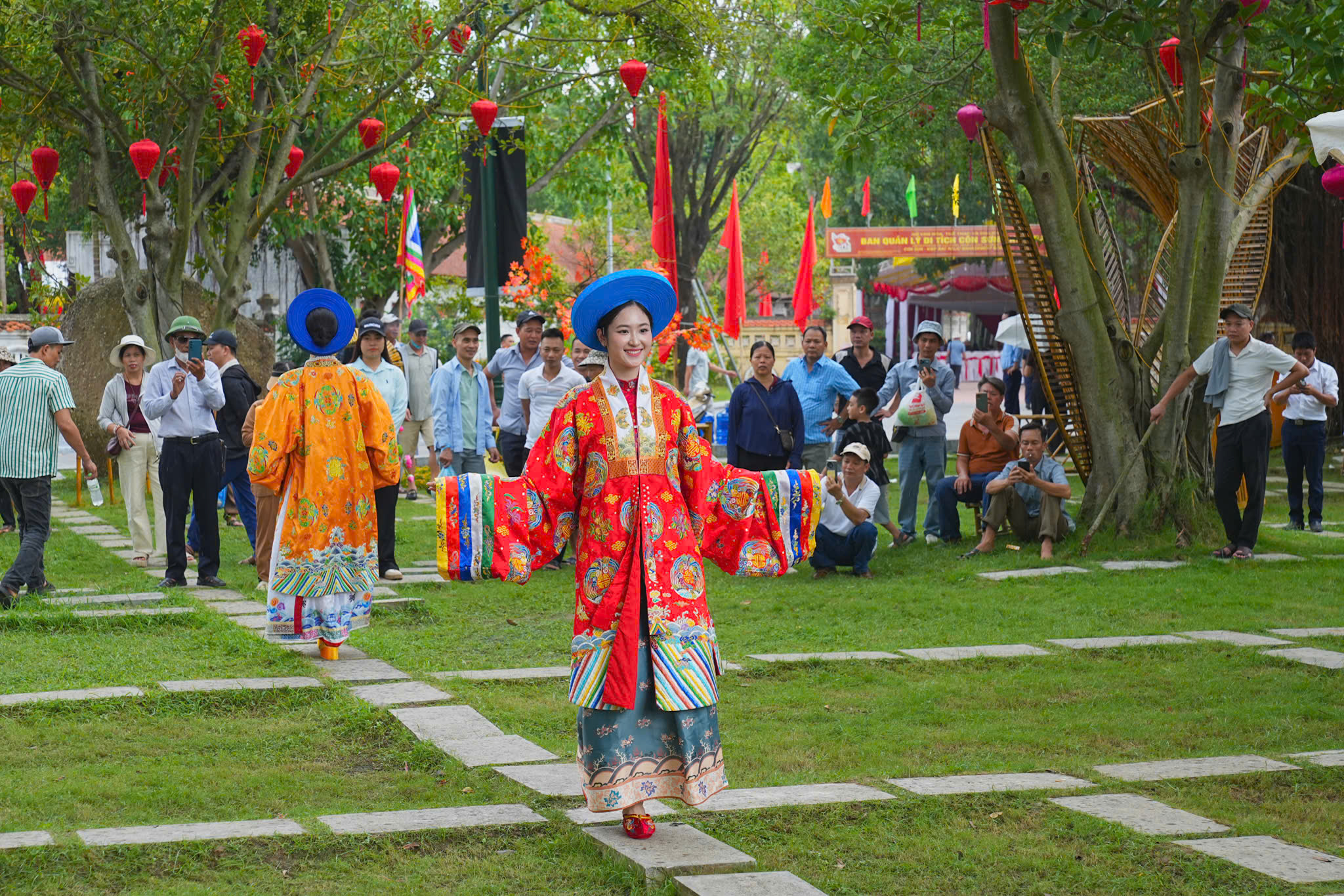 Beauty of Traditional Vietnamese Attire Showcased at the 2026 Autumn Con Son – Kiep Bac Festival.
The traditional Vietnamese costume experience at Con Son – Kiep Bac was first introduced in autumn 2025 through a programme entitled “The Splendour of Vietnamese Traditional Costumes – Exploring Heritage”. The programme was held at the festival for the first time and jointly organised by the Con Son – Kiep Bac Relic Site Management Board, Xu Dong Hoi Quan and relevant organisations.
Visitors were invited to wear traditional Vietnamese costumes from the Nguyen and Le dynasties, reconstructed based on historical sources. They could take photos within the relic site and learn about the costumes, as well as the history and cultural traditions associated with each type of attire.
This experience has helped bring the public closer to cultural heritage. Knowledge that was traditionally conveyed through books, artefacts and guided explanations has become more vivid and engaging, as visitors can wear the costumes themselves, pose for photographs and explore the cultural contexts in which the garments were once worn.
This approach also reflects Xu Dong Hoi Quan’s ongoing efforts to promote traditional Vietnamese culture. The association currently has nearly 300 sets of traditional Vietnamese costumes, predominantly from the Nguyen dynasty, including ao ngu than (five-panel garments), ao tac (formal traditional robes), ao Nhat Binh (court robes worn by royal women), dragon robes and phoenix robes. Many of these costumes have been meticulously reconstructed based on historical records and original garments.
Xu Dong Hoi Quan brings these costumes to festivals, historical sites and cultural venues, giving local residents and visitors opportunities to experience traditional Vietnamese attire first-hand.
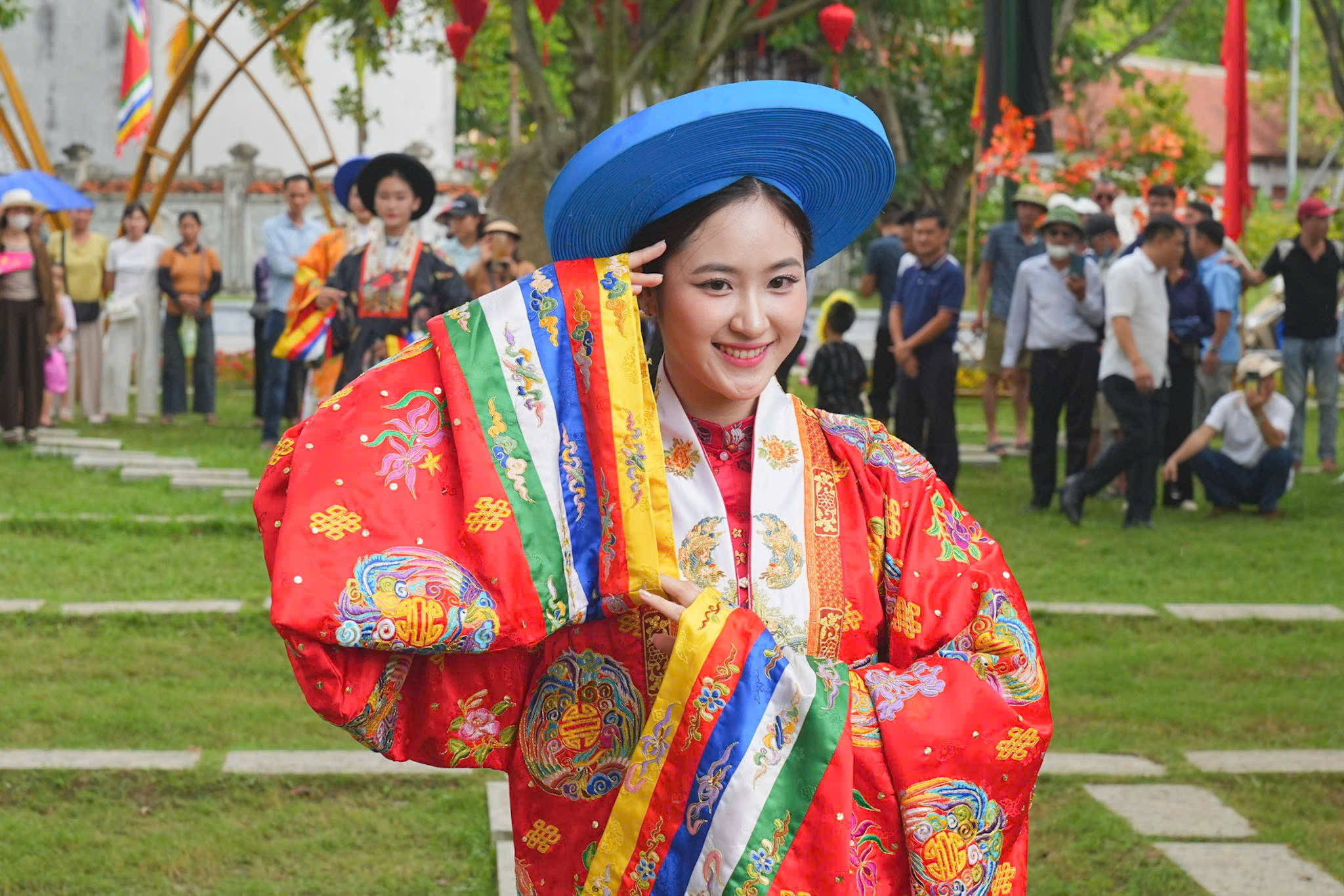 The Timeless Charm of Vietnamese Traditional Costumes Amid the Autumn Hues of Con Son – Kiep Bac
A notable feature of this activity is that traditional Vietnamese costumes are not presented merely as artefacts to be admired, but rather as a medium through which the public can actively engage in cultural experiences. By wearing traditional attire, visitors have the opportunity to examine more closely its designs, colours, materials and reconstruction techniques, while learning about the historical stories behind each garment.
At the 2025 Autumn Con Son – Kiep Bac Festival, the programme “The Splendour of Vietnamese Traditional Costumes – Exploring Heritage” attracted nearly 500 visitor experiences, offering participants the opportunity to wear traditional costumes, take photographs within the relic site and enjoy lotus tea. The activity demonstrated the appeal of combining traditional attire with heritage spaces, with traditional costumes serving as a bridge that enables visitors to explore history and culture in a more direct and emotionally engaging way.
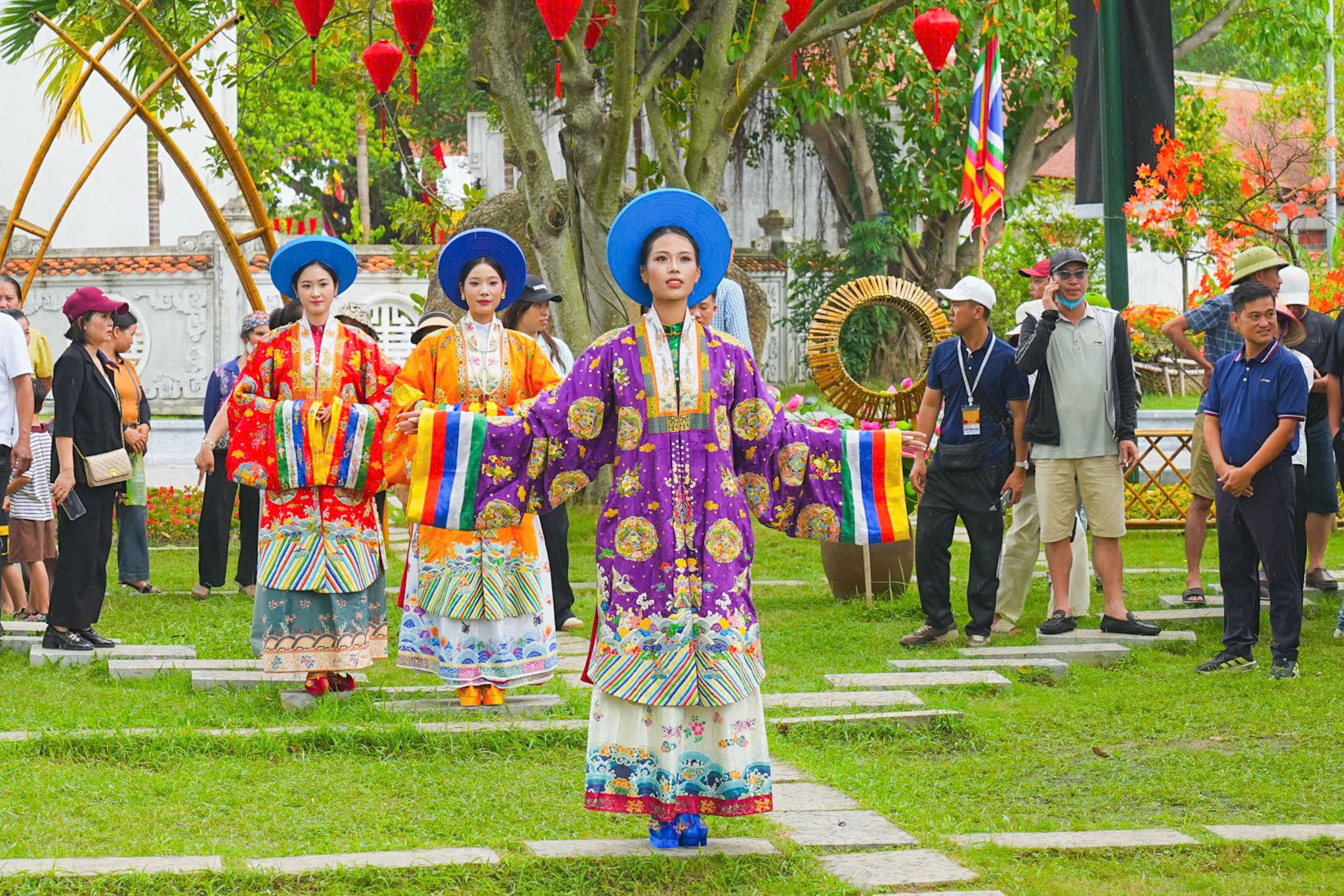 From their designs and colours to their intricate patterns, traditional Vietnamese costumes offer a vivid insight into the nation’s traditional dress culture.
At this year’s Autumn Con Son – Kiep Bac Festival, Xu Dong Hoi Quan continued to promote efforts to bring traditional culture closer to the community through a range of activities. Members and collaborators of the association organised traditional costume showcases at the festival. Images of local residents and visitors dressed in traditional Vietnamese attire and taking part in activities promoting traditional culture added to the vibrant atmosphere of the festival.
Not only stopping at wearing and taking photos, the experience of ancient costumes is also connected to Vietnamese tea and stories about Eastern culture. At the programs, after the performances and experiences of ancient costumes, participants can enjoy tea, chat about history, customs and traditional cultural values. Particularly in Con Son - Kiep Bac, lotus tea is introduced as a product associated with the relic space, creating a connection between costumes, tea, landscapes and cultural stories.
This way of organizing is in line with the general orientation of Con Son Festival, Silver Life - Autumn 2026 is to enhance experiences, taking people and tourists as the center. Within the framework of the Culture, Tourism and Trade Promotion Week, many spaces were built for the public to directly explore heritage, craft villages, OCOP products, agricultural products and cuisine. The Heritage space and lotus tea experience connects 5 points of the World Heritage Site, including Con Son Pagoda, Kiep Bac Temple, Thanh Mai Pagoda, Kinh Chu Cave and Nham Duong Pagoda; The craft village space introduces about 300-400 typical products, along with art activities, water puppetry and cultural experiences.
 The shirts bearing historical imprints create a unique highlight in the series of cultural activities at the Festival.
In that flow, the costume creates a highly interactive form of experience. People not only stand in front of the monument to observe but can become part of the cultural space. A traditional garment, when worn correctly and presented with a historical story, can become a starting point for young people to learn more about a period, a land, a custom or a cultural value of a nation.
In particular, with the Con Son - Kiep Bac space, the experience of ancient costumes also creates a harmony between traditional costumes and heritage landscapes. Ancient costumes are restored from historical documents that appear in the space of temples, pagodas, mountains, ancient trees and ancient architectural works, creating a visual experience associated with the historical story of the land.
From the perspective of tourism, this is also a new way to experience heritage products. Instead of just visiting in the traditional way, visitors have more opportunities to interact, record personal impressions and share experiences. The images of ancient costumes in the middle of the Con Son - Kiep Bac space can therefore become a visual promotion channel, contributing to bringing heritage images closer to the community on digital platforms.
That is also the greater value of the experiential activities at the festival. Heritage is only truly alive when it is received, practiced and transmitted by the community in contemporary life. For Con Son - Kiep Bac, traditional rituals still hold a central position, while experiential activities such as traditional costumes, tea, craft villages, cuisine, and folk arts are being organized appropriately, opening more doors for the public, especially the younger generation, to access heritage in closer ways.
 Each costume is a story about the history, culture and aesthetics of the Vietnamese people through the periods.
After the Yen Tu - Vinh Nghiem - Con Son Monuments and Scenic Complexes was registered as a World Cultural Heritage Site by UNESCO, the requirement is not only to preserve the values intact but also to make the heritage continue to be present in life. Creating in-depth cultural experiences, including traditional costumes, is one of the ways to bring history and culture closer to the community.
From a costume, a cup of tea, a historical story or a photo in the middle of the heritage space, people and tourists can start a wider journey of discovery about Con Son - Kiep Bac. When the experience becomes a bridge, heritage is no longer just a place to go, but becomes a place to understand, to feel and for each person to keep a part of his or her own cultural memory.